
What Is Remote Viewing, you ask? It is defined as a structured practice of perceiving distant or hidden targets without the use of common senses. We dug a bit deeper, and it turned out there is a whole community of people exploring this phenomenon.
At its core, it is about getting information in ways we are not used to. There is a whole theory of collective consciousness, which you can refer to whenever you need information about anything. This was once something attributed mainly to shamans; however, the results became so interesting that the phenomenon gained military and intelligence support for further exploration.
A special protocol was developed in laboratories in the United States. As a result, anyone can now train and verify their perceptions using it. It is called Controlled Remote Viewing.
For training, people look for large pools of target pictures that have specific requirements, which we want to tell you more about. If you want to see target examples yourself, this remote viewing practice app has one of the largest pools of target pictures available — over 7,000.
So, what’s important here?
Core Rules for Remote Viewing Target Pictures
Remote viewing is evaluated through feedback. That feedback becomes stronger when the target picture includes verifiable information.
Below, we examine the core requirements that a photo must meet.
Photo Context Matters As Much As Content
In controlled remote viewing (CRV), the protocol consists of 6 stages. The First Stage is dedicated to rapid, intuitive impression analysis — often called “gestalt capture”. This is where the quality and clarity of the target image become critical.
A beginner cannot learn to distinguish perception from analytical noise if the target itself is ambiguous. A distant bird barely visible in the background, an unclear object partially obscured by shadows, or an image overloaded with secondary elements introduces noise that the beginner viewer may not resolve. All of this directly affects accuracy.
Stage One of the CRV protocol is designed to answer very simple questions, very quickly:
- Is the target primarily natural or manmade?
- Is there land, water, air, or space?
- Is life present?
- Is there movement or energy?
For this reason, the image must clearly express its dominant gestalts.
If the viewer perceives a “natural lifeform and movement,” and the image shows an eagle flying over mountains with the mountains blurred, the feedback becomes invalid. The viewer’s perception is correct, but the contextual ambiguity prevents proper verification, as the viewer did not perceive land.
That’s why it is important for a photo to be clear — it should either show clearly visible mountains or just a bird flying in the sky, to ensure better accuracy.
Entropy-Rich Photos
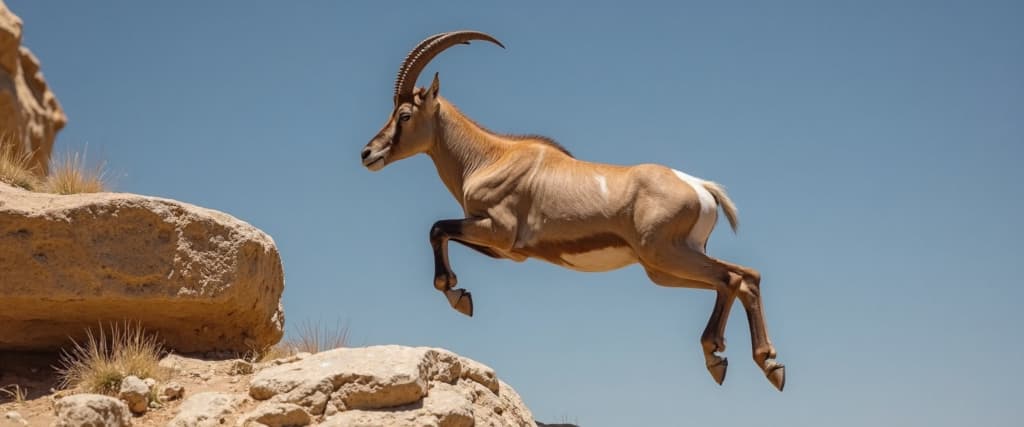
Not the strict requirement but a bonus if there is a lot of entropy. Such photo is a good target for a CRV practitioner. These can be a photo of a goat jumping mid-air between mountains, a geyser that is about to erupt, etc. From the remote viewer’s perspective, an interesting target picture is not simply a clear or aesthetically pleasing image. It is a visual record of an event, environment, or situation that contains high informational entropy.
Clear Origin
Another important aspect is photo objects’ origin. A landscape that appears natural but is heavily engineered, or an object that looks organic but is manufactured, creates classification conflicts in early stages.
For example, dried fruit photographed without context cannot be reliably classified. Was it dried naturally or processed industrially?
Remote viewing requires that the dominant origin of the target — natural or manmade — be immediately recognizable. The image alone should resolve this, and therefore it becomes suitable as a training target. This allows the viewer to build correct perceptual confidence and learn to trust first impressions.
Framing Gestalts Correctly
Certain gestalts require careful framing to be perceived correctly. “Air” is one of them. In remote viewing practice, air is not simply the presence of sky. It is a perceptual experience created by a combination of angle, height, and entropy. A bridge photographed from above, revealing a deep drop, will often be perceived as “air”. Without this visual closure, the viewer may misclassify the target due to insufficient perceptual cues.
This is why aerial perspective, visible height, and spatial openness are essential when choosing photos for air-based targets.
Capturing Movement Correctly
The viewer should not “guess” what they’re seeing.
- If the target is a river, show visible flow.
- If it’s wind, show interaction with the environment.
- If it’s static, avoid motion artifacts.
There must be visible motion: flowing water, wind-bent trees, jumping animals, crashing waves, flying objects. The photo should capture this.
When movement is subtle or conceptual, additional verification steps may be required, which makes the photo target bad for training.
The Best Camera
Any modern smartphone or basic camera is sufficient.
- Image must be:
- In focus
- Resolution should be high enough to see details
- Not shaky
- Properly exposed
- No filters, effects, or heavy editing in order to avoid any overlay in perception
Verifiable Attributes
A viewer describing cold wind, overcast conditions, or coastal humidity can only be validated if those attributes are known and recorded at the time the photo was taken.
For this reason, high-quality target photos should always be anchored to real places and exact dates that can be independently verified.