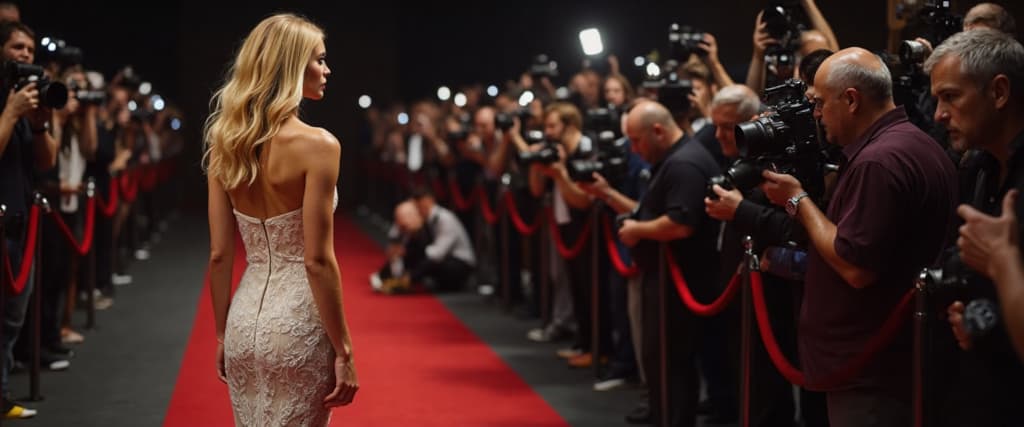
A professional celebrity photographer does not simply photograph famous faces. They document public figures within specific, verifiable contexts: events, premieres, court appearances, public statements, or everyday activities that carry news or cultural relevance.
Editors and agencies look for images that answer clear questions: Who is this? Where are they? Why does this moment matter now? A technically perfect portrait without context has limited editorial value.
Technical Skills Under Pressure
Celebrity photography demands technical precision under extreme time constraints. Lighting conditions change rapidly, subjects move unpredictably, and access windows may last only seconds.
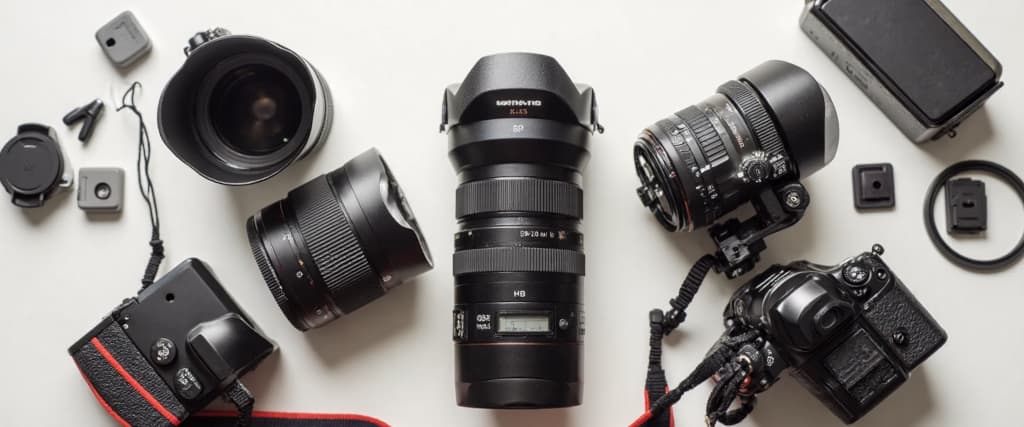
Professionals must be fluent with camera settings and lens choices before arriving on location. Autofocus accuracy, exposure control, and framing must happen instinctively. Hesitation often means missing the shot.
Equally important is adaptability. Celebrity photographers work in bright daylight, low-light interiors, mixed artificial lighting, and crowded environments. The ability to produce consistent results under all conditions separates professionals from amateurs.
Access Is Everything
Access comes through accreditation, relationships, and compliance with rules.
Red carpet events, film festivals, press conferences, and fashion shows require official credentials. These are typically granted by agencies, media outlets, or event organizers — not individuals.
Professionals build access by delivering reliable work, respecting boundaries, and following embargoes and usage rules. Breaking trust can result in permanent loss of credentials.
In this field, reputation spreads quickly. Photographers who behave unprofessionally may find doors closed across the industry.
Legal Knowledge Is Not Optional
You must understand the difference between public and private spaces, editorial and commercial usage, and the limits of consent.
In many jurisdictions, photographing a public figure in a public place is legal — but how that image is used matters. Editorial use is typically protected; commercial use often requires explicit permission.
Mistakes in licensing or privacy can lead to lawsuits, fines, or blacklisting by agencies. For this reason, professionals treat legal knowledge as part of their technical skill set.
Speed, Accuracy, and Metadata
Celebrity images lose value quickly. News cycles move fast, and images must be delivered promptly to remain relevant. Professionals often transmit files directly from the field, sometimes within minutes of capture.
Accuracy is the key aspect. Captions must correctly identify the subject, location, event, and date. A misidentified person or incorrect context can invalidate an image entirely.
Building a Portfolio That Gets Assigned
A portfolio is judged less by artistic experimentation and more by clarity, relevance, and consistency.
Strong portfolios typically include:
- Recognizable public figures
- Clear facial visibility
- Clean compositions without obstruction
- Event context (backdrops, branding, location cues)
Images that feel intrusive, chaotic, or poorly framed are less likely to be published.
Working With Agencies
Most professionals work with agencies. They provide accreditation, distribute images globally, handle licensing, and manage legal risks.
In return, photographers are expected to meet standards for quality, accuracy, and professionalism. Deadlines are strict. Image selection is often done under pressure.
Agencies also shape careers. A strong relationship can lead to regular assignments, international coverage, and long-term financial stability.
Ethics and Boundaries
Despite its association with paparazzi culture, professional celebrity photography operates within ethical norms. Harassment, invasion of privacy, or endangerment of subjects is increasingly rejected by reputable outlets.
Many publications now enforce ethical guidelines that limit aggressive pursuit or intrusive behavior. Photographers who ignore these standards may be excluded from serious editorial work.
The Business Reality
Celebrity photography is competitive. Income is often unpredictable, especially early in a career. Successful professionals diversify: red carpet coverage, editorial assignments, agency work, and archival licensing.
Understanding contracts, exclusivity clauses, and usage rights is essential.
Conclusion
The field of celebrity photography rewards more than technical skill or a flashy portfolio; it values discipline, reliability, and a deep respect for structure. Success is not about being the most visible photographer at an event, but about being the most trusted by editors, agencies, and subjects alike.
Professionals combine mastery of their equipment with the ability to anticipate moments and adapt quickly to changing conditions, whether it’s sudden shifts in lighting, unpredictable crowds, or fleeting access to a subject. Building a career in this field requires a balance of preparation, timing, and storytelling — capturing images that are not only sharp and well-composed but also contextually meaningful.
Trust, credibility, and adherence to ethical and legal standards are equally important, as photographers operate within a framework of rights, permissions, and industry expectations. Aspiring photographers benefit from mentorship, networking, and strategic specialization, learning from experienced professionals who have navigated the complexities of editorial, lifestyle, and event photography.
Ultimately, those who succeed consistently deliver accurate, compelling images under pressure, uphold professional integrity, and maintain strong relationships. In this environment, reliability and professionalism are the true measures of long-term success, far outweighing mere visibility or sensationalism.