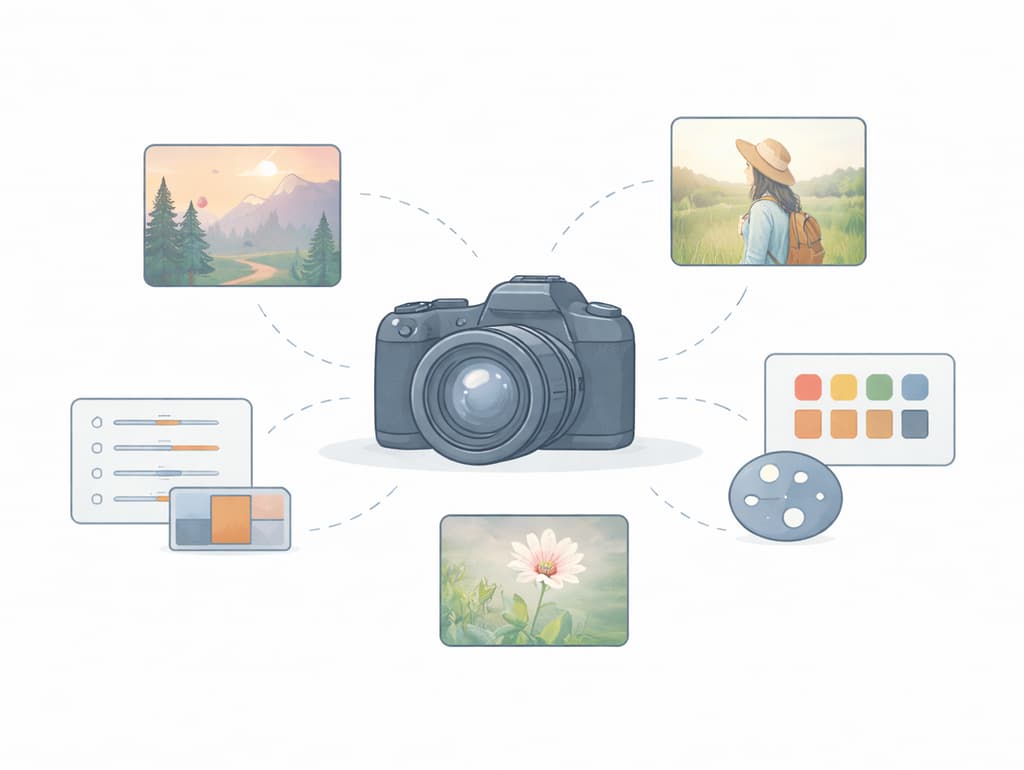
Every photographer starts somewhere. The journey to developing a recognizable style takes time and deliberate effort, and visual consistency matters across all professional fields. Just as platforms like JetonCash casino maintain distinct design identities that users recognize instantly, photographers need cohesive visual signatures. Strong branding through consistent aesthetic choices helps your work stand out in crowded markets.
An authorial style represents the unique way a photographer sees and captures the world. It’s more than technical skill or equipment choices.
This distinctive approach emerges through consistent visual decisions. These include color preferences, composition choices, subject matter, and post-processing techniques. When viewers recognize your work without seeing your name, you’ve achieved something significant.
Discovering Your Visual Direction
Finding your direction starts with honest self-reflection. You need to understand what naturally attracts your eye and why certain images resonate with you more than others.
Analyzing What Draws You In
Start by examining the work you naturally gravitate toward. What images make you pause? Which photographers do you follow religiously? These preferences reveal patterns about your aesthetic sensibilities.
Create a mood board or collection folder. Save images that resonate with you emotionally. Don’t overthink this process. Let your instincts guide you initially.
After gathering enough examples, look for common threads. Do you prefer moody lighting or bright, airy scenes? Are you drawn to minimalism or complex compositions? These patterns point toward your natural inclinations.
Identifying Your Subject Matter
What subjects make you excited to pick up your camera? Some photographers love capturing people. Others find their passion in landscapes, architecture, or abstract details.
Your chosen subjects often reflect your personality and worldview. A street photographer might be drawn to human stories and urban energy. A nature photographer may seek tranquility and natural patterns.
Building Technical Foundations
Technical mastery gives you the tools to execute your vision. Understanding exposure, composition rules, and light behavior is essential. These fundamentals let you make intentional choices rather than happy accidents.
Design elements play a crucial role in creating a cohesive experience. In photography, visual consistency across your portfolio establishes your brand identity and helps viewers connect with your work instantly.
Practice specific techniques repeatedly. Shoot in manual mode to understand how aperture, shutter speed, and ISO interact. Study how light changes throughout the day. These skills become second nature with time.
The Experimentation Phase
Experimentation is where you test boundaries and discover what resonates. This phase involves trying new approaches without fear of failure.
Trying Different Approaches
Early in your journey, experiment broadly. Try various genres, editing styles, and shooting techniques. This exploration helps you discover what feels right and what doesn’t.
Some experiments will fail completely. That’s expected and valuable. Failed attempts teach you as much as successes. They help you eliminate directions that don’t align with your vision.
Document your experiments. Keep notes about what worked and what didn’t. This record becomes a roadmap showing your evolution.
Developing Your Editing Signature
Post-processing significantly impacts your final style. Some photographers favor bold, saturated colors. Others prefer muted, film-like tones. Your editing choices should enhance your images consistently.
Create your own presets or develop a repeatable workflow. This doesn’t mean making every image identical. It means applying consistent principles that tie your work together visually.
Consistency and Refinement
Once you’ve found your direction, the focus shifts to maintaining consistency. This stage is about refining your approach and building a recognizable body of work.
Creating a Coherent Body of Work

Once you identify your direction, focus on consistency. This doesn’t mean shooting the same thing repeatedly. It means applying your unique perspective consistently across different subjects.
Build a portfolio that showcases this cohesion. Remove images that don’t fit your established style, even if they’re technically excellent. A focused portfolio is stronger than a scattered one.
Practical Steps Forward
Here are actionable steps to develop your style:
- Shoot consistently, even when uninspired.
- Review and critique your own work monthly.
- Study photographers whose style you admire.
- Limit your gear to avoid distraction from vision.
- Accept that style development takes years, not months.
Moving Forward with Confidence
Developing an authorial style requires patience and self-awareness. It’s a continuous process of shooting, reviewing, and refining. Don’t rush it or try to force something that doesn’t feel genuine.
Remember that even established photographers continue evolving their style. This journey doesn’t have a finish line. Each phase of your development brings new insights and possibilities for creative expression.